
Beautiful Butterflies by Martina Frank | Finale
16TH OCTOBER 2026 - ASU #547
Today we’re completing our education in all things lepidopterology as we learn about the final four butterflies featured in Martina Frank’s glorious new book Beautiful Butterflies.
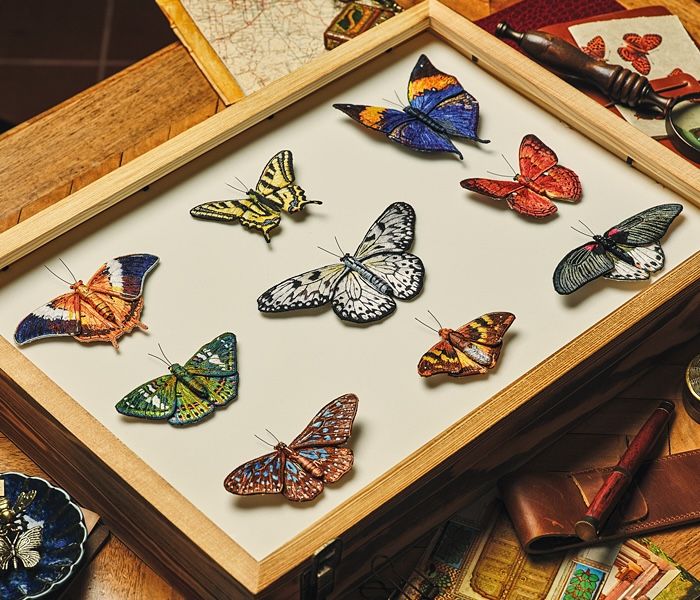
With each stitched specimen based on a real-life butterfly, we’re taking a look at some fascinating insights both into the real insect itself and a little about how Martina goes about re-creating each one.
Blue Tiger
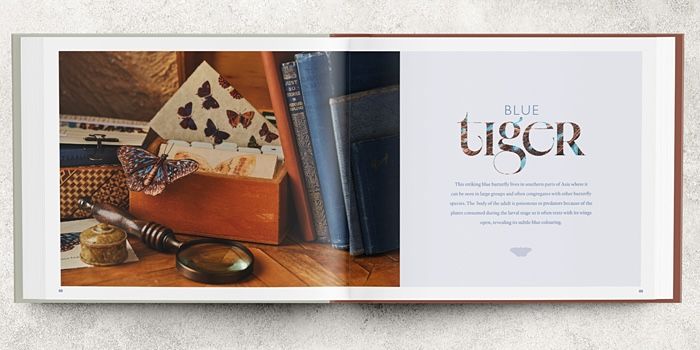
Found throughout southern Asia, the Blue Tiger (Tirumala limniace) is rarely seen alone. It's a gregarious butterfly, often spotted in large groups and mixing freely with other species in the same feeding grounds.
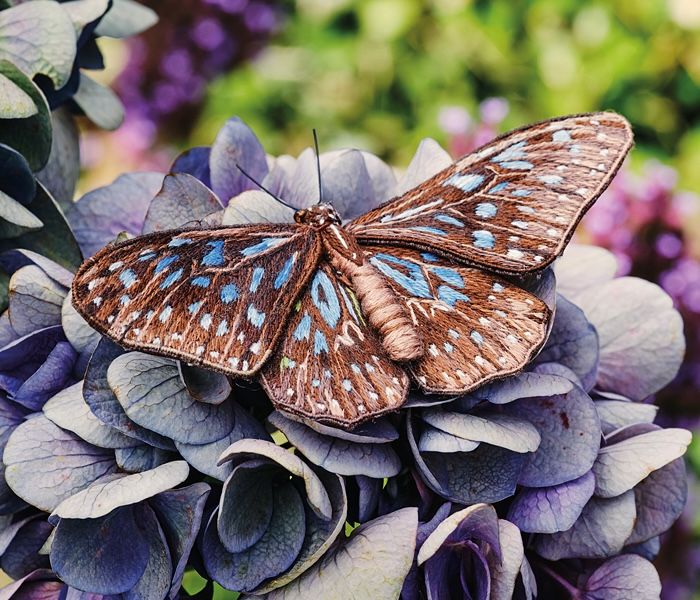
Its body carries a chemical defence acquired during the larval stage, making the adult unpalatable and, in some cases, toxic to predators.
Most camouflaged butterflies keep their wings shut to stay hidden, but the Blue Tiger does the opposite - it rests with its wings wide open, using its toxicity as the disguise instead of its shape.
Found across open forests, grasslands and even urban green spaces, it's a strong flier known for seasonal migrations, covering considerable distances in search of nectar.
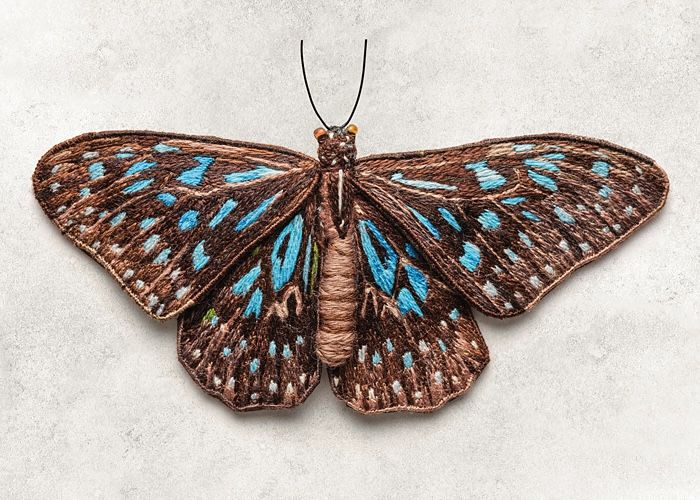
Martina has captured its wings open with the subtle blue markings on show exactly as nature intended. Couching, detached blanket stitch, long and short stitch, satin stitch and seed stitch build the delicate patterning, with straight stitch and wrapping used to shape the body and antennae.
Tawny Rajah
Ranging from north-east India down into Indonesia, the Tawny Rajah (Charaxes bernardus) favours dense forest at low elevation, usually settling at the base of hills, though it's capable of climbing to 1,000 metres when it chooses to.
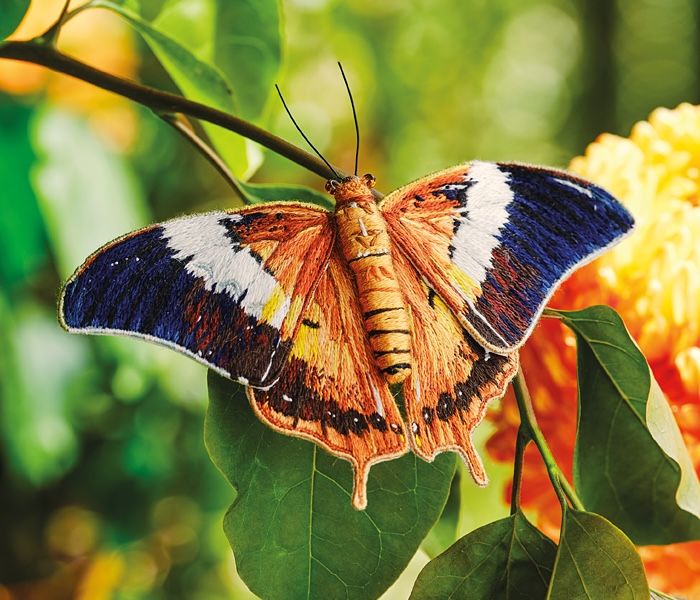
Strongly territorial, it's known for rapid acceleration and fast, long-distance flight, chasing off rivals and intruders from its patch with real conviction.
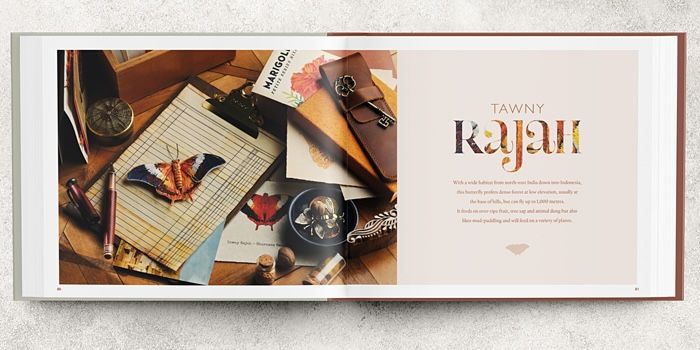
Like its cousin the Gaudy Baron from earlier in the book, the Tawny Rajah has a taste for mud-puddling - though its palate runs a little further, feeding on over-ripe fruit, tree sap and even animal dung.
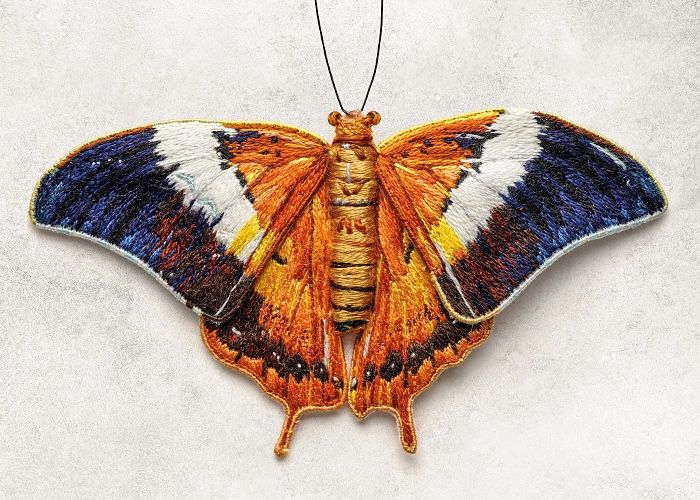
To render its bold, banded wings, Martina used back stitch, couching, detached blanket stitch, long and short stitch and outline stitch, with satin stitch, split back stitch and stab stitch adding definition to the markings.
Great Mormon
Common throughout southern Asia, the Great Mormon (Papilio memnon) is a swallowtail with a twist: it's the female depicted here, and her exquisite colouring is something the predominantly black males never display.
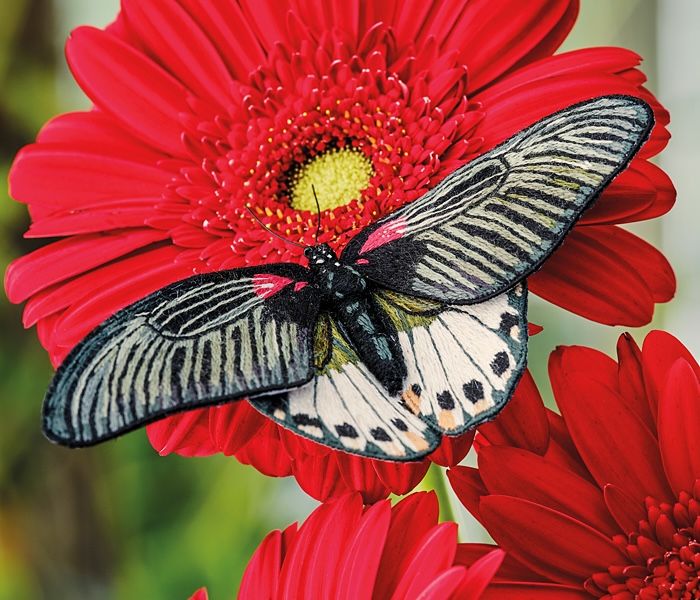
Females of this species occur in multiple forms, several of which mimic toxic butterflies as a defence strategy, while the males remain comparatively uniform in appearance.
It's a rare case of the female stealing the spotlight entirely - in most butterfly species it's the male doing the showing off.
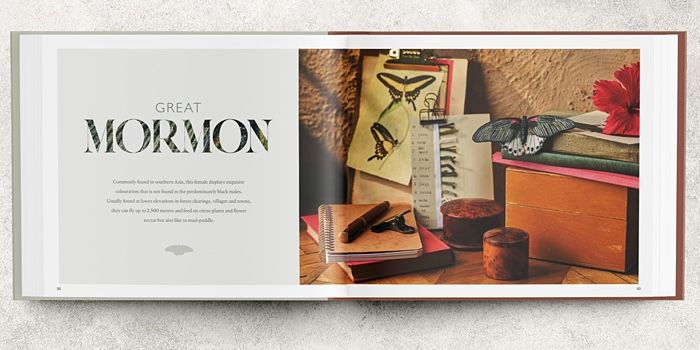
Usually found at lower elevations in forest clearings, villages and towns, it can fly as high as 2,500 metres and feeds on citrus plants and flower nectar, making it an important pollinator wherever it travels.
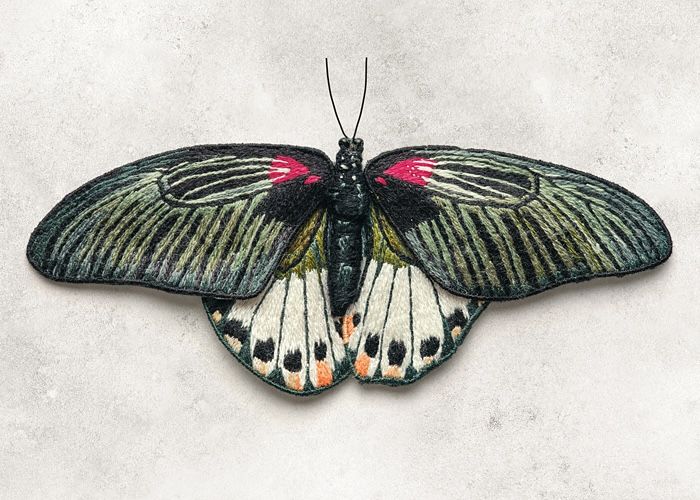
The largest of this quartet, its dramatic markings were built up with back stitch, couching, detached blanket stitch, long and short stitch and satin stitch, with split back stitch, stab stitch, stem stitch and straight stitch adding the fine detail.
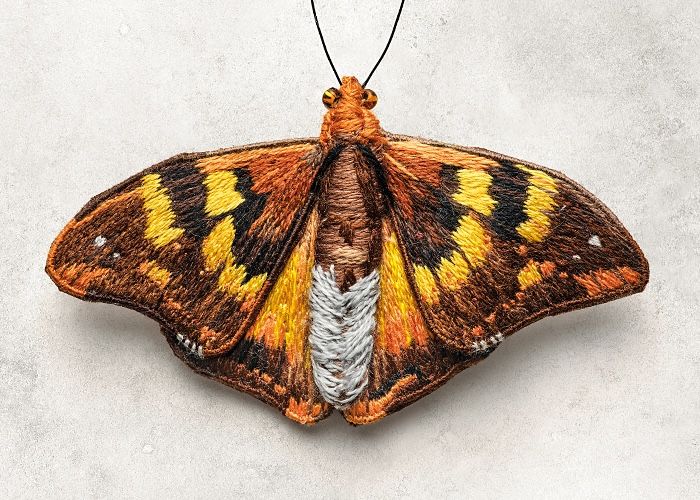
Golden Emperor
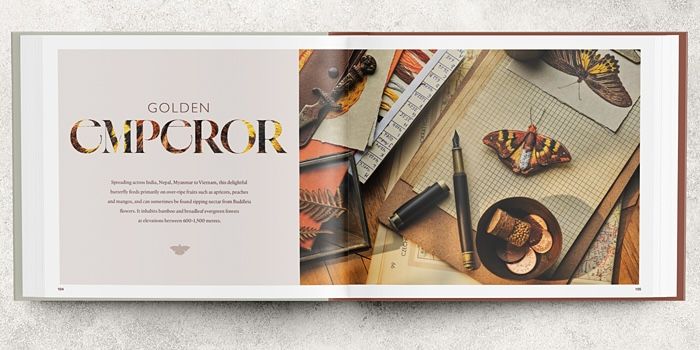
Spreading from India and Nepal through Myanmar to Vietnam, the Golden Emperor (Dilipa morgiana) feeds primarily on over-ripe fruit such as apricots, peaches and mangoes, occasionally sipping nectar from Buddleia flowers.
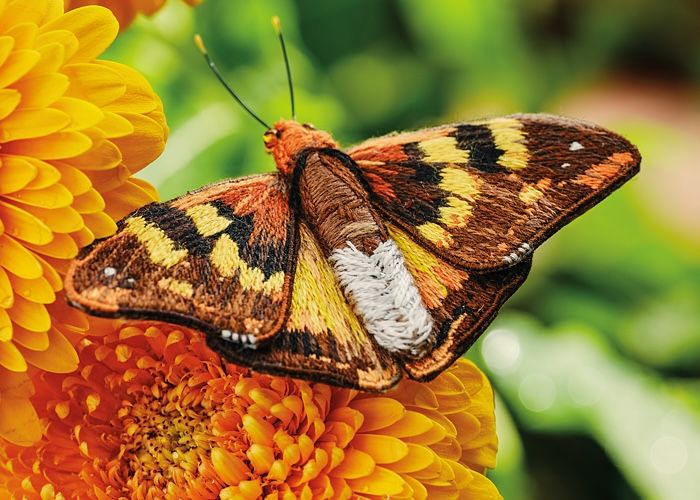
It inhabits bamboo and broadleaf evergreen forests at elevations between 600 and 1,500 metres, favouring dense, shaded cover.
Closed wings tell a different story to open ones here too - much like the Orange Oakleaf from earlier in this series, the Golden Emperor is camouflaged to resemble a dead leaf or scrap of plant debris when at rest.
The smallest butterfly in the book at just 70 to 90mm (2 ¾–3 ½") across, it called for a slightly leaner toolkit: couching, long and short stitch, satin stitch and split back stitch, with stab stitch, straight stitch and wrapping completing the body and antennae.
When it comes to admiring the beauty and wonder of these stitched beautiful butterflies yourself, we have two options for you:
Hardcover Book
1/. The book Beautiful Butterflies is out now and available to purchase. This publication pairs some of the most outstanding photography of embroidery in a real-life setting you will ever see with full instructions, construction notes and templates for all nine butterflies.
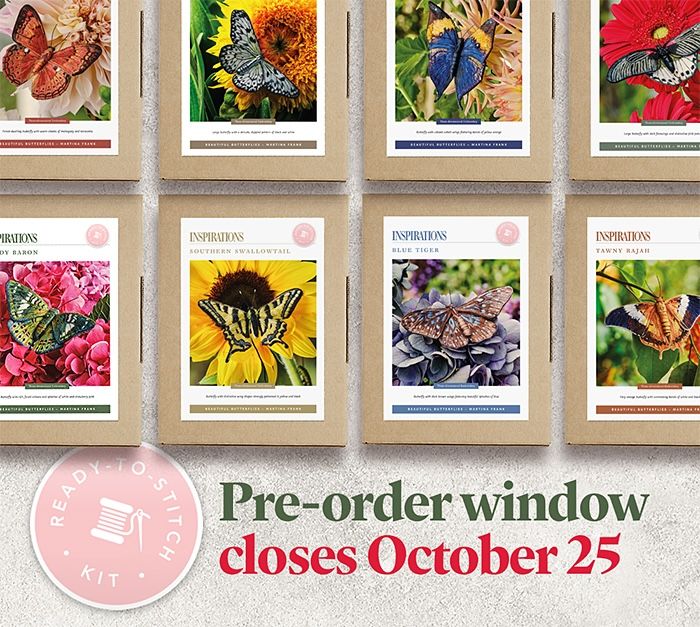
Ready-to-Stitch Kits | Pre-Order Window Now Open
2/. Ready-to-Stitch kits for all nine butterflies are also available to order individually giving you the choice to either re-create one or two of your favourites or stitch the entire collection as a stunning display.
Be quick - we are about to produce another batch of Beautiful Butterflies kits!
If you are interested in securing a Ready-to-Stitch kit of your favourite butterfly, place your pre-order no later than Sunday 25th October at which time we’ll finalise numbers and begin production, with kits expected to ship late February next year.
All the links you seek are below… just a reminder that the kits do not include instructions as everything you need is included in the book.